
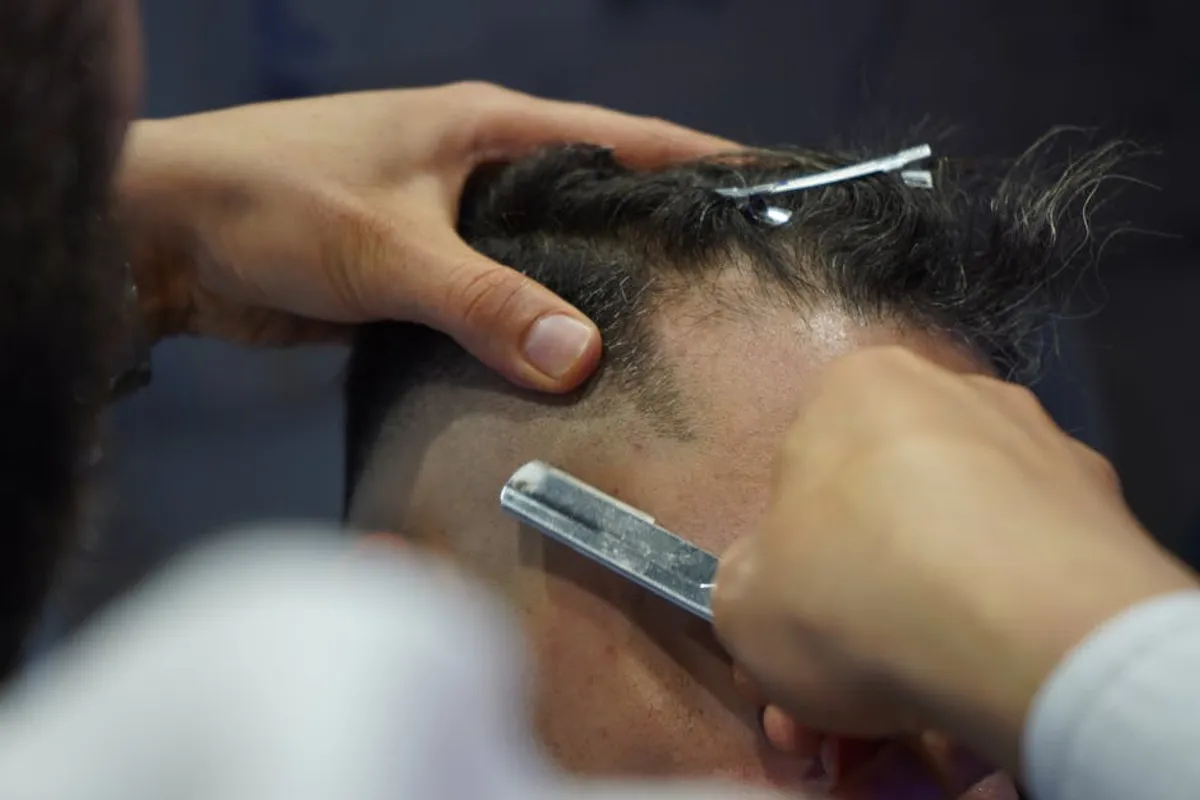
Men with straight hair often face a distinct set of challenges and opportunities when selecting a haircut. Unlike wavy or curly textures that offer inherent volume and movement, straight hair tends to lie flat, revealing every cut line and requiring specific techniques to achieve desired shape or lift. The key to a successful straight hair cut lies in leveraging its natural characteristics: its ability to create sharp, clean lines, its sleekness, and its potential for a polished finish. Understanding how different cuts interact with straight hair’s inherent structure is crucial for achieving a style that looks good, is manageable, and aligns with personal aesthetic preferences. Understanding how different cuts interact with straight hair’s inherent structure is crucial for achieving the best men's hairstyles for straight hair.
Understanding Straight Hair Characteristics
Before committing to a specific style, consider the unique attributes of straight hair. Its lack of natural curl means it often appears smoother and reflects light more uniformly, giving it a natural sheen. However, this also means it can lack volume at the roots and may fall flat without proper cutting and styling. The density of your straight hair—whether it's fine, medium, or thick—will heavily influence how a cut behaves and how much product it can hold. Fine straight hair, for instance, benefits from cuts that create the illusion of fullness, while thick straight hair can support more structured and voluminous styles.
Strategic Haircuts for Men with Straight Hair
The Classic Undercut
The undercut remains a strong choice for straight hair due to its inherent contrast and clean lines. This style involves keeping the sides and back significantly shorter than the hair on top, often with a distinct disconnect rather than a gradual fade. Straight hair accentuates this contrast, making the top appear fuller and more prominent. The sharp division between lengths is easily maintained with straight hair, which naturally resists blending into the shorter sections.
- Disconnected Undercut: This version features a clear, abrupt line where the longer top hair meets the much shorter sides. It’s ideal for showcasing the sleekness of straight hair on top.
- Faded Undercut: While still an undercut, the fade provides a smoother transition from very short at the bottom to longer at the top of the sides, offering a slightly softer edge while retaining the overall structure.
Best for: Individuals seeking a sharp, modern look with defined structure. Easily styled with pomades or gels for a slick, controlled finish.
The Slick Back
Straight hair is inherently suited for a slick back. Its natural tendency to lie flat, combined with the right product, allows for a smooth, unbroken surface that exudes sophistication. This style works by directing all the hair back from the forehead, creating a streamlined profile.
Styling Consideration: Achieving a true slick back requires a strong-hold pomade or gel applied to damp hair, then combed back meticulously. For added volume at the crown, a blow dryer can be used to direct the hair backward while applying product.
Best for: Professional settings, formal events, or anyone desiring a polished, low-fuss look that emphasizes the hair's natural straightness.
Pro Tip: When discussing a slick back or undercut with your barber, be precise about the desired length on top and the severity of the side cut. Bring reference photos to ensure alignment on the exact aesthetic, especially regarding the fade or disconnect line. Straight hair shows every imperfection, so clarity is paramount.
The French Crop
For those preferring shorter, lower-maintenance options, the French crop is an excellent choice. This style features short back and sides, often faded, with a slightly longer top that is cut horizontally to create a blunt fringe. Straight hair excels here by forming clean, defined edges for the fringe, which can be styled forward or with a subtle texture.
Variations: A textured French crop involves point-cutting the ends of the fringe to add movement, preventing it from looking too blocky. A classic French crop maintains a very clean, straight fringe line.
Best for: Men who want a modern, stylish cut that requires minimal daily styling, and for those with fine straight hair who want to create the illusion of density.
The Side Part
A timeless and versatile option, the side part capitalizes on straight hair's ability to create sharp, defined lines. This cut involves a clear part on one side, with the hair combed smoothly over. The straightness of the hair ensures the part line is crisp and the overall look is neat and structured.
Styling Consideration: A natural side part can be found by observing where your hair naturally separates. For a more dramatic or intentional part, a comb can be used to create a deeper line. Light-hold creams or pomades help keep the hair in place without stiffness.
Best for: A classic, professional aesthetic suitable for most face shapes, offering a refined yet approachable appearance.
The Quiff
While often associated with wavy hair for natural volume, a quiff is entirely achievable with straight hair through strategic cutting and styling. The quiff requires longer hair on top, which is then styled upwards and backward from the forehead, creating height and a dynamic silhouette. Straight hair needs more product and blow-drying technique to achieve and maintain this lift.
Styling Steps: Apply a pre-styler (like a sea salt spray) to damp hair, then blow-dry the top section upwards and backward using a round brush or your fingers to create volume. Finish with a strong-hold pomade or paste to lock the shape in place.
Best for: Adding significant volume and a stylish, confident edge. Requires more styling effort but offers a dramatic transformation.
Maintaining Your Straight Hairstyle
Regardless of the chosen cut, proper maintenance ensures your straight hair looks its best. Regular trims are essential to keep the shape defined and prevent split ends, especially for styles with sharp lines like undercuts or French crops. For medium-length styles, trims help manage weight and maintain desired flow.
Selecting the right products is equally critical. For sleek styles, water-based pomades offer shine and strong hold without excessive greasiness. For textured looks, matte pastes provide grip and definition without a shiny finish. Sea salt sprays can add initial volume and texture to fine straight hair before styling. A good quality shampoo and conditioner formulated for your hair type will maintain scalp health and hair integrity, ensuring your chosen style always performs optimally.
Frequently Asked Questions
What are the best products for men with straight hair?
For strong hold and shine, water-based pomades are ideal for slick backs and classic side parts. Matte pastes or clays offer texture and a natural finish for French crops or textured quiffs. Sea salt sprays can add volume and prep fine straight hair for styling.
How often should I get a trim for straight hair?
For short, structured styles like undercuts or French crops, a trim every 3-4 weeks is recommended to maintain sharp lines. Longer styles or those with natural flow might only need trimming every 6-8 weeks to manage length and remove split ends.
Can straight hair have volume?
Yes, straight hair can achieve volume through strategic cutting (e.g., layering on top for a quiff) and styling techniques. Using a blow dryer with a pre-styler (like volumizing mousse or sea salt spray) to lift roots, followed by a strong-hold product, can create significant volume.
What styles should men with fine straight hair avoid?
Men with fine straight hair should generally avoid very long, one-length styles that can appear thin and lifeless. Instead, opt for cuts with layers or shorter lengths that create the illusion of density and volume, such as a French crop or a shorter textured quiff.