Men with straight hair often find themselves at a crossroads when selecting a hairstyle. While curly or wavy textures offer inherent volume and movement, straight hair presents a unique canvas that, when approached correctly, allows for sharp lines, clean finishes, and sophisticated structures. The key lies in understanding how straight hair behaves – its tendency to lie flat, its responsiveness to cutting techniques, and its capacity for holding specific shapes with the right product. This guide explores a range of men’s hairstyles specifically suited for straight hair, moving beyond generic recommendations to detail the practical considerations for each style, from maintenance demands to the specific aesthetics they convey. This guide explores a range of men’s hairstyles specifically suited for straight hair, moving beyond generic advice to explore new styles for straight hair.
What to Consider for Straight Hair
Choosing a hairstyle for straight hair involves more than just picking a picture. The density of your hair, your face shape, and your daily routine all play critical roles in determining a style's suitability and how well it will integrate into your life. Fine straight hair benefits from cuts that add visual volume and texture, while thick straight hair can support more structured and defined styles. Consider your face shape: a round face might benefit from styles that add height, whereas a longer face could be balanced by styles with more width. Finally, honestly assess your commitment to styling. Some straight hairstyles require minimal effort, while others demand specific products and daily attention to maintain their intended form.
1. The Classic Side Part
The Classic Side Part remains a cornerstone of men's grooming, offering a clean, professional, and timeless aesthetic. This style leverages the natural straightness of the hair to create a distinct, sharp parting line, typically swept to one side. The length on top is usually moderate, allowing for a smooth comb-over, while the sides are kept shorter, often tapered, to maintain a neat silhouette. Its appeal lies in its versatility, transitioning effortlessly from formal business settings to casual weekend wear without losing its polished edge.
Best for: Oval, square, and rectangular face shapes; professional environments; individuals seeking a low-to-moderate maintenance style with a refined finish.
Pros:
- Timeless and universally flattering.
- Relatively easy to style with a comb and minimal product.
- Conveys professionalism and attention to detail.
- Adaptable to various hair densities, from fine to thick.
Cons:
- Can appear too conservative for some personal styles.
- Requires regular trims to maintain sharp lines.
- May lack significant volume if hair is very fine or thin.
Verdict: An excellent foundational style for straight hair, offering a consistently sharp appearance with manageable styling demands. Its enduring popularity is a testament to its reliability.
2. The Slick Back
The Slick Back is a bold statement, characterized by all hair on top being combed straight back from the forehead, often with a significant amount of product to achieve a glossy, held finish. This style capitalizes on straight hair's ability to lie flat and maintain a uniform direction. It projects an aura of confidence and sophistication, drawing attention to facial features. The sides can be cut short with a fade or kept slightly longer and slicked back as well, depending on the desired level of contrast and formality.
Best for: Square, oval, and diamond face shapes; individuals desiring a strong, defined look; those comfortable with using styling products daily.
Pros:
- Creates a striking, polished, and confident appearance.
- Keeps hair entirely off the face, practical for some professions.
- Emphasizes facial structure and jawline.
- Works well with both short and medium-length top hair.
Cons:
- Requires daily application of strong-hold pomade or gel.
- Can make fine hair appear thinner if not styled carefully.
- May feel heavy or greasy if too much product is used.
- Not ideal for very active lifestyles where product might break down.
Verdict: A high-impact style for straight hair that demands commitment to product and maintenance, delivering a sharp, commanding presence when executed well.
3. The Quiff
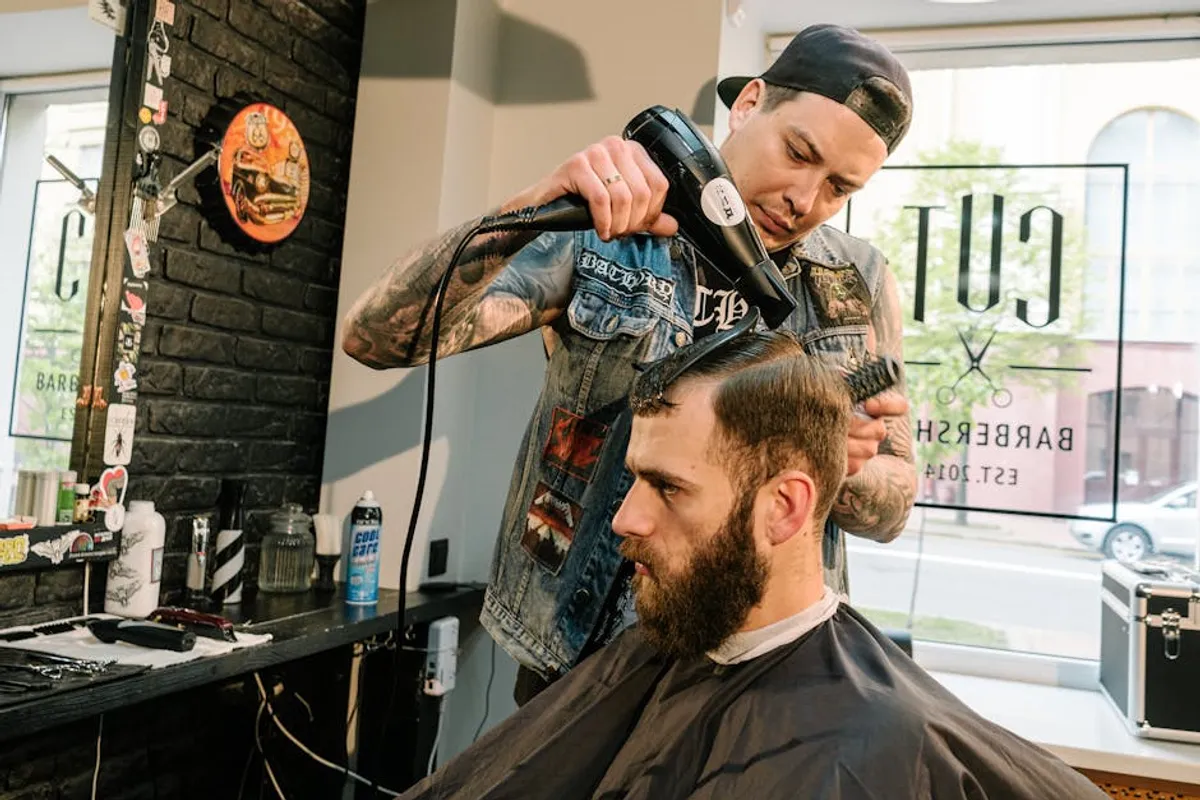
The Quiff is defined by its volume and height at the front, sweeping upwards and backwards from the forehead, while the sides and back are kept shorter. For straight hair, the key to a successful quiff lies in strategic cutting and effective styling to create the necessary lift and hold. Layers on top can help build volume, and a blow-dryer is often essential to direct the hair and set the shape. It offers a balance between classic elegance and contemporary flair, providing a dynamic yet refined look.
Best for: Oval, square, and heart-shaped faces; those who want to add height and dimension; individuals willing to invest time in styling.
Pros:
- Adds significant volume and height, flattering for many face shapes.
- Versatile enough for both formal and casual occasions.
- Allows for personalization in terms of height and overall shape.
- Can make straight hair appear thicker and more dynamic.
Cons:
- Requires daily styling with a blow-dryer and product for optimal shape.
- May collapse in humid conditions or with insufficient product.
- Can be challenging to achieve with very fine or stubbornly flat hair.
Verdict: A stylish choice that elevates straight hair, demanding a consistent styling routine but rewarding with a sophisticated, voluminous look.
4. The Pompadour
The Pompadour takes the volume of a quiff to a more dramatic level, featuring a much larger, often more rounded mass of hair swept up and back from the forehead. This style requires significant length on top, especially at the front, and a strong understanding of how to use a blow-dryer and high-hold products to achieve its iconic shape. For straight hair, the inherent smoothness can be an advantage in creating a sleek, uniform roll of hair, though building the necessary volume requires technique and product. The sides are typically cut short, often faded, to emphasize the contrast with the voluminous top.
Best for: Oval, square, and triangular face shapes; fashion-forward individuals; those dedicated to a daily, detailed styling routine.
Pros:
- Creates an undeniably bold and stylish statement.
- Adds considerable height and presence.
- Allows for creative expression through varying degrees of volume and shape.
- Highlights a well-groomed aesthetic.
Cons:
- High maintenance, requiring daily blow-drying, backcombing, and strong-hold products.
- Not suitable for very thin or fine hair that struggles to hold volume.
- Can be uncomfortable or impractical in windy conditions.
- Requires frequent trims to maintain the shape and fade on the sides.
Verdict: An impactful, high-fashion style for straight hair that demands considerable styling effort but delivers a distinct, confident look.
5. The French Crop
The French Crop is characterized by short sides and back, often faded, with a slightly longer top that is cut horizontally across the forehead, forming a blunt fringe. For straight hair, this style is particularly effective because the hair's natural tendency to lie flat allows for a clean, sharp fringe line. The top can be left smooth or lightly textured to add movement without losing the defined shape. It's a low-maintenance, modern, and versatile cut that suits various aesthetics, from edgy to understated.
Best for: All face shapes, especially those seeking to balance a longer face; individuals preferring a low-maintenance yet stylish cut; those with receding hairlines.
Pros:
- Extremely low maintenance and easy to style daily.
- Provides a clean, contemporary, and sharp appearance.
- Can help conceal a receding hairline by drawing attention forward.
- Works well with both fine and thick straight hair.
Cons:
- Requires regular trims to keep the fringe and fade sharp.
- May feel too short or severe for some preferences.
- Limited styling versatility once cut to this specific shape.
Verdict: A highly practical and stylish option for straight hair, offering a sharp, modern look with minimal daily effort, ideal for those prioritizing convenience and clean lines.
6. The Crew Cut
The Crew Cut is a classic, short hairstyle where the hair on the top is cut relatively short, gradually tapering in length from the front hairline to the crown, while the sides and back are clipped even shorter. For straight hair, the crew cut offers a pristine, uniform finish due to the hair's lack of curl or wave. It's a no-fuss, highly practical style that conveys neatness, discipline, and a timeless masculine appeal. The exact length on top can vary, allowing for slight personalization, but the overall aesthetic remains consistently clean.
Best for: All face shapes; individuals seeking maximum convenience and minimal styling; athletes or those in professions requiring a very neat appearance.
Pros:
- Extremely low maintenance and requires virtually no daily styling.
- Always looks neat, clean, and professional.
- Ideal for hot climates or active lifestyles.
- Highlights facial features without distraction.
Cons:
- Offers very limited styling versatility.
- Requires frequent trims to maintain its short, sharp shape.
- May feel too short or stark for those accustomed to longer hair.
Verdict: The ultimate low-maintenance choice for straight hair, delivering an unfailingly clean and practical look that prioritizes ease and neatness.
7. Textured Fringe
The Textured Fringe involves keeping the top hair longer, often with layers, and styling it forward to create a fringe that falls across the forehead. The "textured" aspect is crucial for straight hair, as it prevents the fringe from looking too blocky or flat. This is achieved through specific cutting techniques like point cutting or razor cutting, which break up the ends of the hair, allowing for movement and a softer, more natural fall. It's a contemporary style that adds a youthful and casual vibe.
Best for: Oval, square, and heart-shaped faces; individuals wanting a modern, relaxed look; those looking to soften strong facial features.
Pros:
- Adds movement and visual interest to straight hair.
- Offers a softer, more approachable aesthetic than blunt cuts.
- Can be styled casually or with a slight lift for more volume.
- Effective for disguising a high forehead or thinning hairline at the front.
Cons:
- Requires specific cutting techniques to achieve the desired texture.
- May need light product to maintain separation and prevent flatness.
- Can fall into eyes if not trimmed regularly.
Verdict: A versatile and modern option for straight hair, the textured fringe provides a relaxed yet stylish look that effectively adds dimension and softens features.
8. Undercut with Top Length
The Undercut features significantly shorter or shaved sides and back, creating a sharp contrast with a much longer length on top. For straight hair, this contrast is particularly striking, as the clean lines of the undercut emphasize the smooth, uninterrupted flow of the longer hair above. The top can be styled in various ways—slicked back, swept to the side, or worn as a quiff—making it a highly adaptable style. The straightness of the hair allows for a very defined separation between the short and long sections, enhancing the style's bold character.
Best for: Oval, square, and round face shapes; individuals seeking a high-contrast, modern, and edgy look; those who enjoy styling their hair.
Pros:
- Creates a bold, contemporary, and often edgy aesthetic.
- Highly versatile for styling the longer top section.
- Keeps sides and back neat and cool, reducing bulk.
- Emphasizes the clean lines and smooth texture of straight hair.
Cons:
- Requires regular maintenance to keep the undercut sharp and clean.
- Can appear severe if the contrast between lengths is too extreme.
- Styling the top section often requires daily effort and product.
Verdict: A dynamic and customizable style for straight hair, the undercut offers a strong visual statement and allows for significant personal expression through its versatile top section.
9. Shoulder-Length Flow
The Shoulder-Length Flow embraces the natural fall of straight hair, allowing it to grow out to a length that typically reaches the shoulders or slightly beyond. This style relies on the hair's inherent straightness to create a smooth, uninterrupted cascade. Minimal layering might be used to remove bulk or add slight movement, but the essence is a uniform, natural flow. It conveys a relaxed, artistic, or bohemian vibe, emphasizing the health and natural texture of the hair. While seemingly low maintenance in terms of daily styling, growing out straight hair to this length requires patience and proper care.
Best for: Oval, square, and longer face shapes; individuals committed to growing out their hair; those seeking a natural, unforced aesthetic.
Pros:
- Emphasizes healthy, natural hair texture.
- Requires minimal daily styling once length is achieved.
- Conveys a relaxed, artistic, and effortless cool.
- Can be tied back for practicality when needed.
Cons:
- Requires significant time and patience to grow to desired length.
- Can look unkempt if not regularly conditioned and trimmed for split ends.
- May not suit professional environments with strict grooming codes.
- Can feel warm in hot weather.
Verdict: A commitment to length, the shoulder-length flow for straight hair offers a natural, low-effort style that exudes a relaxed confidence, provided hair health is maintained.
10. Caesar Cut
The Caesar Cut is a short, classic hairstyle characterized by an even length all around, with a short, blunt fringe cut horizontally across the forehead. Similar to the French Crop but typically shorter and more uniform in length on top, it's an excellent choice for straight hair because the hair's natural tendency to lie flat ensures a clean, sharp fringe. This style is low-maintenance, masculine, and has a historical appeal, often associated with Roman emperors. It's a practical option for those seeking a neat, no-fuss cut that still offers a distinct shape.
Best for: All face shapes, particularly those with a receding hairline; individuals seeking a very low-maintenance, classic look; those who prefer shorter styles.
Pros:
- Extremely low maintenance and easy to style.
- Provides a clean, sharp, and masculine appearance.
- Excellent for concealing a receding hairline or high forehead.
- Works well with both fine and thick straight hair.
Cons:
- Offers very limited styling versatility.
- Requires frequent trims to maintain the specific fringe length and shape.
- Can appear too severe or basic for some personal styles.
Verdict: A consistently neat and practical choice for straight hair, the Caesar cut provides a distinct, classic look with minimal daily effort, ideal for those prioritizing simplicity and order.
11. Taper Fade with Textured Top
This style combines the clean, gradual shortening of a taper fade on the sides and back with a longer, textured top. For straight hair, the taper fade creates a very sharp and seamless transition from short to long, highlighting the precision of the cut. The textured top, achieved through layering and point cutting, adds movement and volume that straight hair often lacks naturally, preventing it from appearing flat. The contrast between the tightly faded sides and the dynamic top makes for a modern and stylish look that is both clean and expressive.
Best for: Oval, square, and round face shapes; individuals seeking a contemporary, versatile look; those who appreciate a clean yet dynamic style.
Pros:
- Offers a modern, clean, and stylish aesthetic.
- The textured top adds volume and movement to straight hair.
- Highly versatile, allowing for various styling options on top (forward, up, side-swept).
- Keeps the sides and back neat and fresh.
Cons:
- Requires regular barber visits to maintain the fade's sharpness.
- Styling the textured top may require light product and some effort.
- Can be challenging to achieve the desired texture if hair is very fine and resistant to volume.
Verdict: A strong contemporary choice for straight hair, this style masterfully blends sharp precision with dynamic texture, offering a stylish and adaptable look that stays current.
12. The Buzz Cut
The Buzz Cut is the shortest of all men's hairstyles, achieved by clipping the hair to a uniform, very short length all over the head, typically using clippers with a guard of 1/2 inch or less. For straight hair, the buzz cut is exceptionally clean and uniform, as there are no curls or waves to disrupt the evenness of the cut. It's the epitome of low-maintenance, requiring no styling whatsoever, and conveys an image of rugged simplicity, confidence, or practicality. While offering minimal versatility, its starkness makes a powerful statement.
Best for: All face shapes; individuals seeking the absolute lowest maintenance style; those embracing a minimalist or utilitarian aesthetic; military personnel.
Pros:
- Zero daily styling required, maximum convenience.
- Ideal for hot weather or active lifestyles.
- Conveys a strong, confident, and no-nonsense image.
- Highlights facial features and bone structure.
Cons:
- Offers no styling versatility whatsoever.
- Requires very frequent self-clipping or barber visits to maintain length.
- Leaves little room to hide imperfections on the scalp.
- Can feel too severe or impersonal for some individuals.
Verdict: The ultimate in low-maintenance for straight hair, the buzz cut is a practical and bold choice for those prioritizing simplicity and a strong, unadorned aesthetic.
Choosing Your Ideal Straight Hairstyle
Selecting the right hairstyle for straight hair involves a blend of personal preference, practical considerations, and an understanding of how your hair behaves. Start by assessing your hair density and texture: fine straight hair might benefit from cuts that add visual volume, while thick straight hair can support more structured styles. Consider your face shape; certain cuts can enhance or balance your features. For instance, a style with height can elongate a round face, while width can balance a longer face. Your lifestyle and commitment to daily styling are also crucial. If you prefer a wash-and-go approach, opt for lower-maintenance cuts like the French Crop or Crew Cut. If you enjoy the ritual of styling and using products, more elaborate options like the Pompadour or Quiff become viable. Finally, a consultation with an experienced barber or stylist can provide invaluable personalized advice, helping you bridge the gap between inspiration and a practical, flattering cut that suits you.
FAQ About Men’s Straight Hairstyles
Q: Can straight hair have volume?
A: Yes, straight hair can achieve volume through strategic layering, proper blow-drying techniques (lifting at the roots), and the use of volumizing products such as mousse or sea salt spray. Styles like the Quiff or Pompadour are designed to maximize volume.
Q: What products work best for straight hair?
A: For hold and shine, pomades and gels are effective, especially for slicked-back or side-parted styles. For texture and natural movement, sea salt sprays, texturizing powders, and lightweight creams work well. Volumizing mousses can add lift at the roots during blow-drying.
Q: How often should I get a haircut for straight hair?
A: The frequency depends on the style. Shorter, precise cuts like the Crew Cut, French Crop, or any style with a fade often require trims every 2-4 weeks to maintain their sharp lines. Longer styles can go 6-8 weeks between trims to maintain shape and remove split ends.
Q: Is it harder to style straight hair than curly hair?
A: Straight hair often requires more effort to create volume or texture, as it tends to lie flat. Curly hair, conversely, might need more effort to control frizz or define curls. Each hair type has its own styling challenges and advantages; straight hair excels at clean lines and sleek finishes.
Q: What are good styles for fine straight hair?
A: For fine straight hair, styles that add visual density or texture are ideal. The French Crop with a textured top, a short Classic Side Part, or a textured fringe can make hair appear fuller. Avoiding excessive length can also prevent fine hair from looking limp.
Q: Can I achieve a messy look with straight hair?
A: Yes, a controlled messy look is achievable with straight hair. This often involves specific cutting techniques to add texture and layers, followed by styling with texturizing products like matte pomades, waxes, or sea salt sprays. The goal is to create defined separation and movement without looking unkempt.