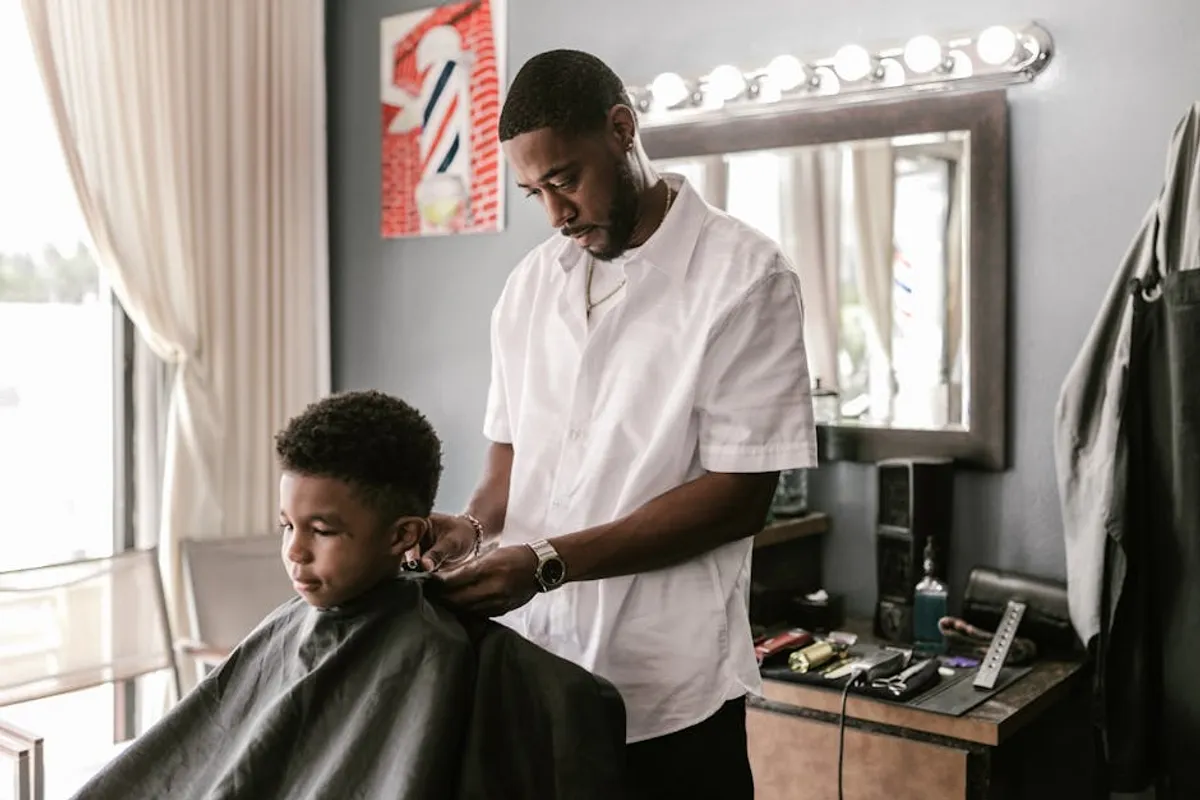
Selecting a boy's haircut involves more than just current trends; it requires a strategic assessment of age, lifestyle, and crucially, face shape. A well-chosen style not only enhances appearance but also contributes to confidence and ease of maintenance. For parents and guardians, understanding these foundational elements ensures the haircut aligns with both aesthetic preferences and practical needs, avoiding frequent salon visits for corrections or dissatisfaction. This guide outlines how to approach haircut decisions by systematically evaluating these factors, leading to a more informed and satisfying outcome. This guide outlines how to approach haircut decisions by systematically evaluating these factors, leading to a more informed and better-suited style for your boy.
Decoding Face Shapes for Optimal Haircuts
Recognizing a boy's face shape is the primary step in selecting a haircut that complements his features. Different shapes respond better to specific cuts, enhancing angles or softening lines as needed. Misaligning a haircut with a face shape can exaggerate undesirable features or create an unbalanced look. Here are the common face shapes and their general characteristics:
- Oval: Considered the most versatile, with balanced proportions. Forehead is slightly wider than the chin, and the jawline is gently rounded. Almost any haircut works well.
- Round: Characterized by soft curves and similar width and length. The goal is to add height or angles to elongate the face. Avoid styles that add width to the sides.
- Square: Strong, angular jawline, broad forehead, and similar width and length. Haircuts should soften sharp angles or complement the strong features.
- Long/Rectangular: Longer than it is wide, with a straight jawline and forehead. Styles should add width to the sides and avoid excessive height to prevent further elongation.
- Heart: Wider forehead and cheekbones, narrowing to a pointed chin. Haircuts should balance the wider top with the narrower bottom, often by adding volume around the jawline.
- Diamond: Narrow forehead and jawline, with wide cheekbones. Styles should add width to the forehead and jaw to balance the prominent cheekbones.
To determine face shape, observe the widest part of the face, the shape of the jawline, and the overall length-to-width ratio. This initial assessment provides a clear direction for suitable styles.
Haircut Selections by Developmental Stage
Haircut choices evolve with age, reflecting changes in activity levels, personal preferences, and the ability to maintain a style. What works for a toddler rarely suits a teenager, and vice-versa.
Early Childhood: Toddlers and Young Boys (Ages 1-8)
For this age group, practicality and comfort are paramount. Haircuts must be low-maintenance, allow for active play, and keep hair out of eyes. Safety during the cut is also a key consideration, favoring quicker, simpler styles.
- Buzz Cut:
Best for: Round and oval faces. This uniform, short cut requires minimal styling and is ideal for active children. It emphasizes facial features directly, making it a strong choice for well-proportioned or softer faces. It is also exceptionally easy to maintain, reducing daily grooming battles.
- Crew Cut:
Best for: Oval, square, and round faces. Slightly longer on top than a buzz cut, allowing for a small amount of texture or a slight side part. It offers a clean, tidy appearance while remaining practical. The graduated length provides a subtle lengthening effect for rounder faces and highlights strong jawlines on square faces.
- Classic Taper:
Best for: All face shapes. This timeless style is shorter on the sides and back, gradually getting longer towards the top. It's versatile and can be adapted with varying top lengths. Its balanced nature makes it universally flattering and appropriate for school or formal events, offering a neat look without being overly severe.
Pre-Teen Transitions: Ages 9-12
As boys enter pre-teen years, they often begin to develop their own style preferences. Haircuts can become more expressive, incorporating modern elements while still being manageable.
- Textured Crop:
Best for: Oval, square, and heart faces. This cut features short sides and back with a slightly longer, textured top often styled forward. It adds volume and movement, which can soften a strong jawline or add definition to an oval face. The textured top makes it versatile for styling with light products.
- Side Part:
Best for: Oval, square, and round faces. A classic style that involves parting the hair to one side, with the top often left longer for styling. It creates a sophisticated, clean look that can be adapted for various hair textures. For round faces, the side part adds an angle that breaks up the face's circularity, while for square faces, it provides a refined contrast to strong features.
- Slight Undercut/Fade:
Best for: Oval, round, and square faces. A subtle version of the popular undercut, where the sides are noticeably shorter than the top but without extreme contrast. This introduces a modern edge while maintaining an age-appropriate appearance. It helps to add height for round faces and defines the structure for square faces.
Teenage Expression: Ages 13-18
Teenagers often seek styles that reflect their individuality and current trends. Haircuts in this age group tend to be more complex, requiring some styling effort, and allowing for greater personal expression.
Pro Tip: When discussing haircut options with a barber, bring reference photos. Visual aids clarify expectations for both style and length, minimizing miscommunication and ensuring the desired outcome. This is especially critical for more intricate styles or specific texture requirements.
- Modern Quiff:
Best for: Oval, square, and round faces. The quiff involves longer hair on top, swept upwards and backward, often with faded or short sides. It adds significant height, which elongates round faces and provides a stylish contrast to strong square jawlines. It requires daily styling with product to maintain its shape and volume.
- Slick Back/Pompadour:
Best for: Oval and square faces. These styles feature longer hair on top, styled back smoothly or with volume at the front. They exude a classic, refined aesthetic. The height and backward sweep of a pompadour add an elegant lift, while a slick back offers a clean, sophisticated profile. Both require moderate to strong hold products for definition and longevity.
- Textured Fringe/Flow:
Best for: Long, heart, and diamond faces. Styles where the hair is longer and falls forward or naturally flows. A textured fringe can soften a long face or a prominent forehead, while a natural flow allows longer hair to move freely. These cuts often require less daily styling but benefit from products that enhance natural texture and reduce frizz.
Beyond Shape: Hair Texture and Lifestyle Factors
While face shape guides the fundamental structure of a haircut, hair texture and lifestyle considerations refine the choice. These elements dictate how a style will look and how easily it can be maintained.
Hair Texture:
- Straight Hair: Ideal for sharp lines, precise parts, and geometric cuts. Can appear flat if too long without layers.
- Wavy Hair: Benefits from cuts that enhance natural movement. Layering can prevent it from looking bulky.
- Curly Hair: Requires cuts that manage volume and define curls. Too short can lead to a 'poofy' effect, while too long can become unruly.
- Coily Hair: Best with styles that celebrate its natural volume and texture. Fades and tapers work well to manage sides, leaving length on top for shape.
Lifestyle:
- Active Boys: Shorter, low-maintenance styles like buzz cuts, crew cuts, or short fades are practical for sports and minimize sweat-related issues.
- School/Formal Settings: Classic tapers, side parts, or well-groomed quiffs offer a neat, respectable appearance.
- Creative/Expressive: Longer styles, undercuts, or textured crops allow for more personal styling and trend adoption.
Consider the time available for daily styling. A highly textured quiff or a slick back demands product application and shaping, whereas a buzz cut or classic taper is largely wash-and-go. This practical assessment ensures the chosen haircut is sustainable for both the boy and the caregiver.
Making the Right Cut Decision
Choosing a boy's haircut involves a systematic process: first, accurately identify the face shape to establish the foundational style. Next, consider the boy's age and developmental stage to align with appropriate trends and practical needs. Finally, integrate hair texture and lifestyle factors to ensure the style is both aesthetically pleasing and manageable on a daily basis. Open communication with the boy (if old enough) and the barber is essential to translate these considerations into a successful, confidence-boosting haircut.
Common Questions on Boy Haircuts
How often should a boy get a haircut?
Most boys benefit from a haircut every 3-6 weeks to maintain shape and neatness, especially for shorter styles. Longer styles can go 6-8 weeks.
What products are best for boy's hair?
This depends on the style and hair type. For hold, light pomades or styling creams work well for textured styles, while stronger gels might be needed for quiffs or slick backs. Always choose products designed for children or those with gentle ingredients for younger boys.
Can a haircut really boost a boy's confidence?
Yes. A haircut that suits a boy's face shape and reflects his personal style can significantly improve his self-perception and confidence, making him feel more comfortable and stylish.
What if my boy doesn't want the haircut I picked?
Involve older boys in the decision-making process. Discuss options, show examples, and find a compromise that balances their preferences with what suits their features and is practical to maintain. Communication fosters satisfaction.